
Formative assessment
Eliciting student understanding to adjust instruction is one of the most effective teaching strategies for improving student achievement (Black & Wiliam, 2009; Wiliam, 2011). Scriblit amplifies teachers’ ability to elicit student understanding by actualizing the five key strategies of formative assessment identified by Black and Wiliam (2009):
1. Clarifying and sharing learning intentions and criteria for success
Teachers monitor student responses in Scriblit and lead discussions to create a shared understanding.
2. Engineering effective classroom discussions & other learning tasks that elicit evidence of student understanding
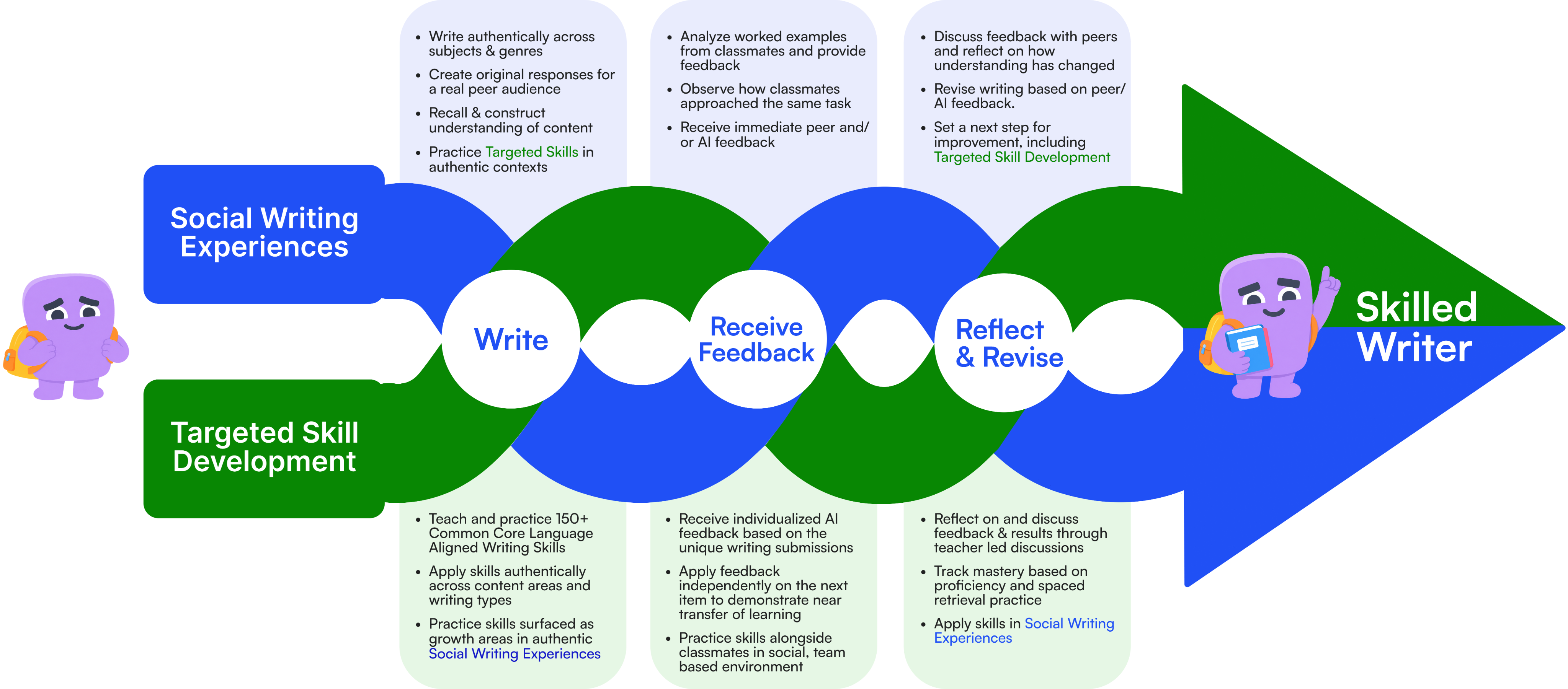
Discussion and debate of peer-constructed responses and feedback are central to all Scriblit activities, all of which are based on recall of content and construction of understanding through writing.
3. Providing feedback that moves learners forward
Students receive immediate, actionable peer and/or AI feedback grounded in the research of Dylan Wiliam (2011) in that it dedicates class time for students to think about and use feedback, offers specific suggestions for future action and improvement rather than only focusing on what was done wrong, and encourages discussion of what makes for strong understanding.
4. Activating students as instructional resources for one another
Students learn by both receiving and giving feedback to others in Scriblit. A wide array of research describes the positive impacts of peer feedback on student learning, especially when scaffolded through comparative judgment:
5. Activating students as the owners of their own learning
Self-rated confidence scores before and after Scriblit activities enable students to reflect on their own comprehension and calibrate their learning.